
Nissan Qashqai e-POWER Sets a Guinness World Record
18 August, 2026
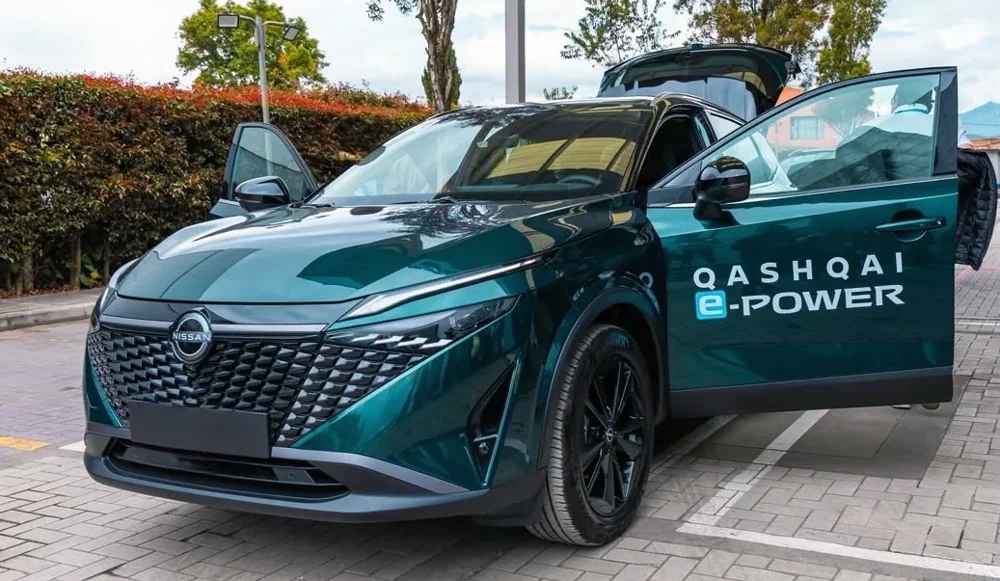
Nissan Qashqai e-POWER Sets New 1,980km Guinness World Record
The Nissan Qashqai e-POWER has put its innovative electrified technology to the test, completing an extraordinary 1,980km journey across Colombia on a single tank of fuel, without stopping to refuel or plug in.
The achievement has earned the Qashqai an official Guinness World Records title and provides an impressive demonstration of Nissan’s distinctive approach to electrified driving.
For us at Ingham, it’s also an exciting example of how Nissan continues to rethink what electrified motoring can look like – particularly for drivers who want an electric-motor driving experience without needing to plug their vehicle in.
Nearly 2,000km without refuelling
The record-breaking journey took place between 14 and 17 July 2026, beginning in Bogotá before taking the Qashqai north towards Colombia’s Caribbean coast.
By the end of the journey, the Nissan had travelled 1,980km on a single tank of fuel, with no external charging along the way. The attempt was independently monitored before being certified by Guinness World Records.
The resulting title is a particularly specific one: the longest journey by a non-plug-in extended-range electric SUV without external charging or refuelling.
While that’s a mouthful, it highlights exactly what makes the Qashqai e-POWER different.
So, how does Nissan e-POWER work?
You might see “e-POWER” and assume the Qashqai needs to be plugged in to charge. It doesn’t.
Unlike a fully electric vehicle, the Qashqai e-POWER carries a petrol engine. But unlike a conventional petrol vehicle, that engine doesn’t directly drive the wheels.
Instead, the petrol engine generates electricity, while an electric motor provides the drive to the wheels.
That means you get an electrified driving experience while retaining the convenience of filling up at a petrol station.
There’s no need to find a charger, plug the vehicle in overnight or change your routine around charging.
It’s a clever approach and one that can make a lot of sense for New Zealand motorists who are interested in electrified driving but aren’t yet ready to move to a fully electric vehicle.
Why this record caught our attention
A Guinness World Record is impressive, but it’s important to put the 1,980km figure into perspective.
This was a specific, independently monitored record attempt. It shouldn’t be interpreted as the distance every Qashqai e-POWER owner can expect from a tank of fuel in normal New Zealand driving.
Real-world range and fuel consumption will always vary depending on factors including road conditions, traffic, driving style, weather and vehicle load.
For us, the more interesting part of the story is the technology that made the achievement possible.
The Qashqai e-POWER doesn’t ask drivers to choose between a conventional petrol vehicle and a plug-in EV in quite the same way as many other electrified options.
Instead, Nissan has created its own solution: electric-motor drive, with petrol used to generate the electricity needed by the system.
An interesting option for Kiwi driving
That’s particularly relevant here in New Zealand.
Our driving can be incredibly varied. One day might involve a short commute around town, while the next could mean several hours on the open road.
For some households, installing or regularly accessing an EV charger is straightforward. For others, it isn’t.
Qashqai e-POWER offers another way into electrified motoring.
You don’t plug it in. You simply fill it with petrol when required, just as you would with a conventional vehicle. Behind the scenes, the e-POWER system takes care of generating and managing the electricity used to drive the wheels.
The electric motor also provides the smooth, responsive acceleration associated with electric drive, making the difference something you can experience from behind the wheel rather than simply read about on a specification sheet.
The best way to understand e-POWER? Drive it.
A 1,980km Guinness World Record certainly gets our attention, but for anyone considering a Qashqai, there’s a much easier way to discover what e-POWER is all about.
Get behind the wheel. The way the Qashqai e-POWER delivers its power is different from a conventional petrol SUV, and experiencing that difference first-hand is one of the best ways to decide whether the technology suits your driving.
Frequently asked questions
Does a Nissan Qashqai e-POWER need to be plugged in?
No. The Qashqai e-POWER doesn’t require external charging. Its petrol engine generates electricity for the vehicle’s electric drive system.
Does the petrol engine drive the wheels?
No. In the e-POWER system, the wheels are driven by an electric motor. The petrol engine is used to generate electricity.
Did the Qashqai really travel 1,980km on one tank?
Yes. The Qashqai completed the 1,980km Guinness World Records attempt without refuelling or external charging.
Can I expect 1,980km from a tank in everyday driving?
No. This was a specific record attempt under particular conditions. Everyday range and fuel consumption will vary according to how and where the vehicle is driven and other factors.
Is e-POWER the same as a fully electric vehicle?
No. A fully electric vehicle relies on a battery that is charged from an external electricity source. The Qashqai e-POWER generates electricity on board using its petrol engine.
Why might e-POWER appeal to New Zealand drivers?
It offers electric-motor drive without requiring external charging. That may appeal to drivers interested in electrified motoring who still want the convenience and familiarity of refuelling with petrol.
Discover Nissan Qashqai e-POWER at Ingham
The Qashqai’s journey across Colombia might have been about setting a world record, but e-POWER technology is ultimately designed for everyday driving.
If you’re curious about how it feels, we’d love to show you.
Talk to the team at Ingham Nissan about the Nissan Qashqai e-POWER, explore the range, or book a test drive and experience e-POWER for yourself.
The 1,980km distance relates to a specific Guinness World Records attempt conducted in Colombia and is not a representation of expected everyday vehicle range or fuel consumption. Actual results will vary according to driving and operating conditions.