

Exploring the Mitsubishi Triton: A Capable Ute for New Zealand Roads
1 October, 2025
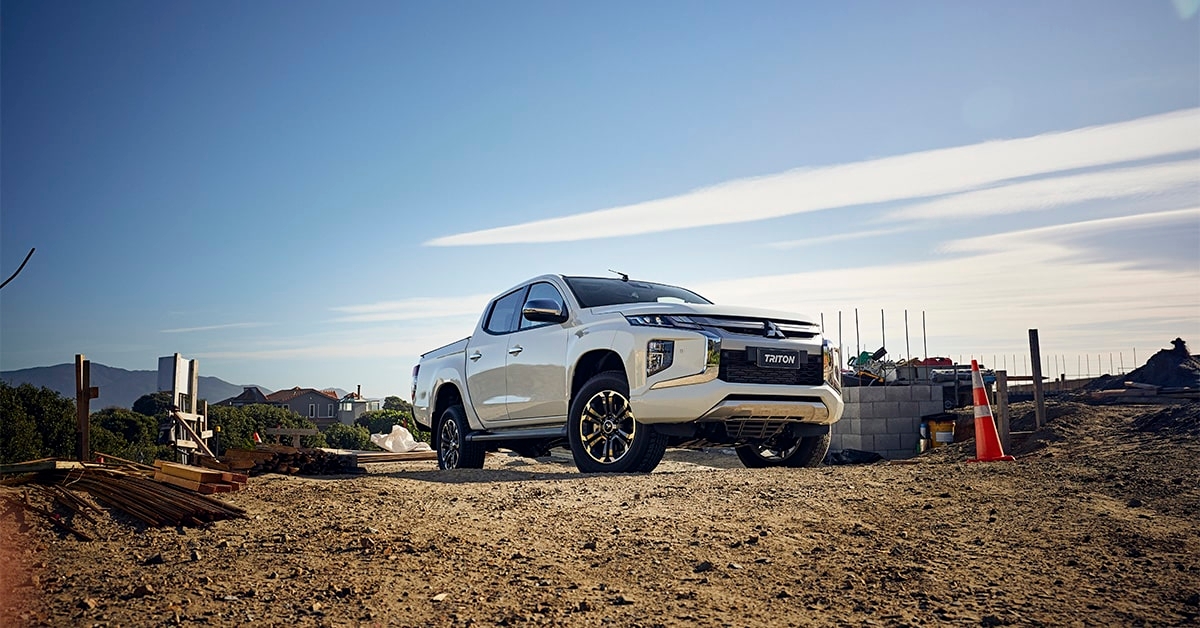
New Zealand has some rugged terrain (and roads), and that calls for a ute that balances capability with everyday comfort — in that regard, the Mitsubishi Triton earns strong marks. From its torque-rich engine to its refined handling, the latest Triton is more than just a workhorse: it is a well-rounded pick for Kiwis who want both grit and civility in one package.
Strong and smooth performance
One of the standout traits is the engine’s delivery. In a first-drive review of the VRX 4WD, Driven Car Guide noted the new engine “delivers its torque smoothly from low speed,” giving the Triton an “effortless feel in rolling acceleration.” (drivencarguide.co.nz VRX review)
Similarly, in the GLX-R review, Drive Car Guide praised the motor for being “slick and torquey, with a delightfully smooth and progressive power delivery.” This is important when climbing New Zealand’s hills or merging on highways, where a responsive midrange makes a real difference. (drivencarguide.co.nz GLX-R review)
Beyond straight-line performance, reviewers observed that the Triton handles surprisingly well for its class. MotoringNZ’s road test of the VRX described “decent control over body roll, steering that’s comparatively quick and weighty,” even with off-road tyres fitted. (mototringnz.com VRX review)
Autocar NZ similarly commented that the top VRX model “is a top-of-the-line rig with all the baubles,” but still holds its capability on tricky terrain. (NZ AutocarVRX review)

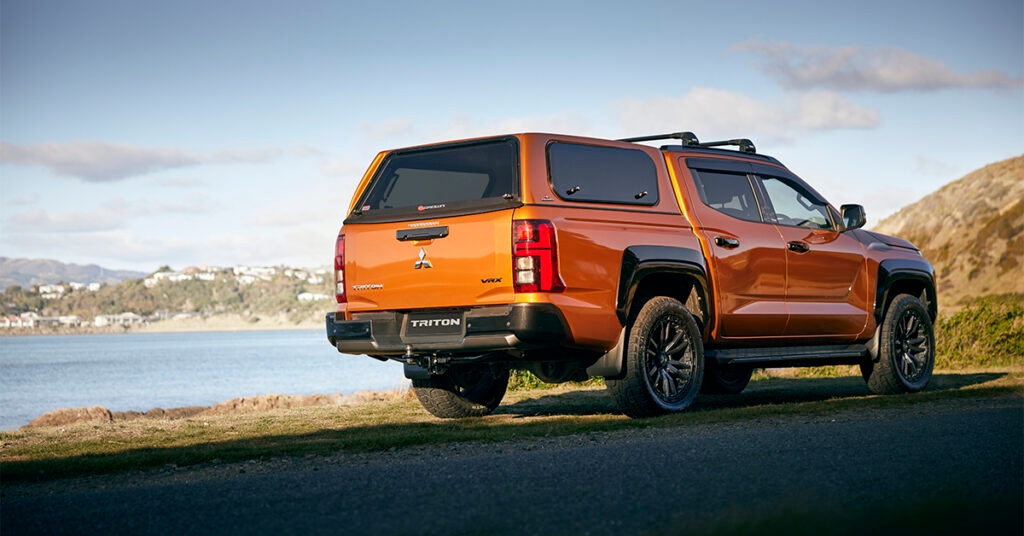
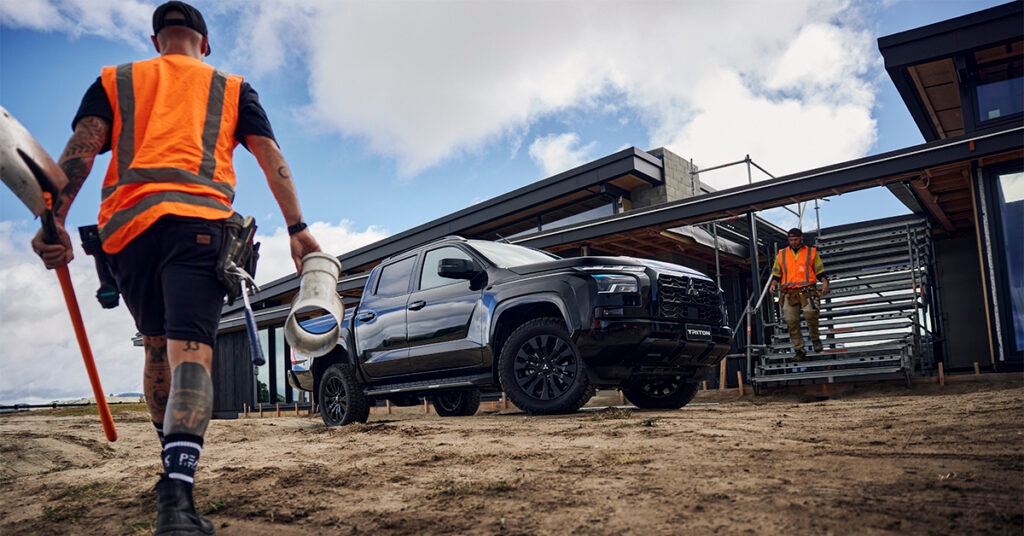

Towing, load capacity and real-world utility
A key strength for many Kiwi buyers is the Triton’s towing and payload numbers. Mitsubishi’s official local site lists a 3.5-tonne braked towing capacity.
Farm Trader, having tested the vehicle, confirmed that it indeed “tows well” under load. In everyday use, that means more confidence when towing boats, trailers or caravans.
In terms of practicality, AutoTrader NZ highlights that the Triton offers “tidy handling, a user-friendly 4×4 system and value for money.” The 4WD system (Super Select or similar variants depending on trim) gives flexibility across road surfaces — an advantage in a country where sealed road quickly gives way to gravel or farm tracks.
Comfort, features and value
Reviewers note that in recent iterations, the Triton’s interior and feature mix have improved. DriveLife called it “one of the best-value new utes available for New Zealand buyers.” (Drivelife.co.nz VRX review)
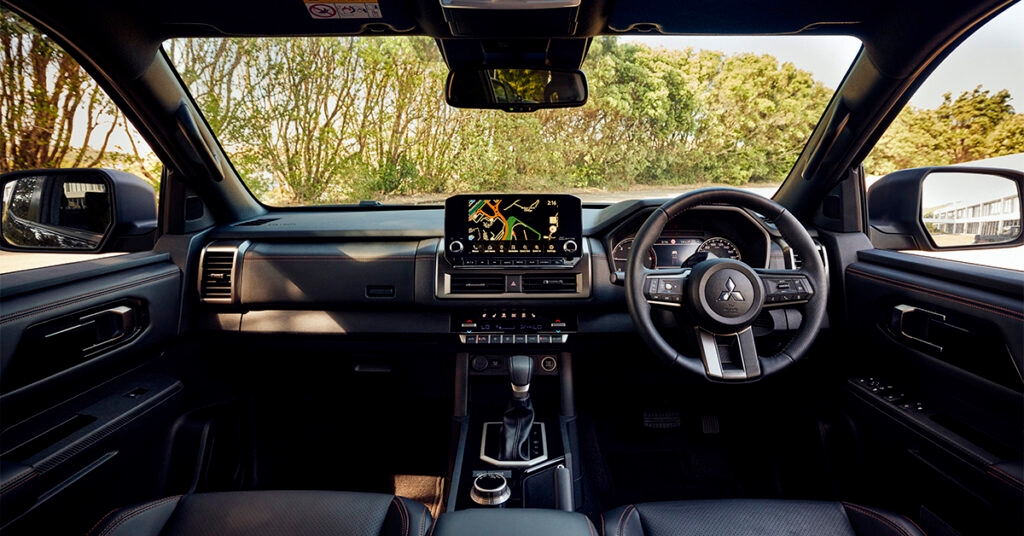
In GLX-R trims, equipment such as modern infotainment, safety aids and well-appointed finishes support a more refined daily drive. While price will always be a factor, the balance of robust capability and usable features makes the Triton a competitive option.
In sum, for Kiwis seeking a ute that is competent off sound surfaces but still civilised on the bitumen, the Mitsubishi Triton deserves serious attention. It does not lead in every category, but in performance, towing ability and everyday usability it offers a credible package for a wide range of users.
2025 Mitsubishi Triton NZ — Buyer FAQ Guide
What engine does the 2025 Triton use, and what are its performance figures?
The 2025 Triton is powered by a 2.4 litre intercooled bi-turbo diesel engine, producing about 150 kW and 470 Nm of torque. Fuel economy is claimed at around 8.6 L/100 km in certain configurations.
What is its towing capacity and payload?
It has a braked towing capacity of 3,500 kg, which is competitive in the mid-size ute segment. The unbraked towing capacity is 750 kg. As for payload, specific numbers vary by trim and configuration (e.g. cab chassis, double cab, etc.), so check the variant you intend to buy (at your local Ingham dealership or official spec sheet)
What drivetrain and 4WD system does it use?
In 4WD versions the Triton features Mitsubishi’s Super Select II 4WD system, with multiple drive modes (High, Low, etc.). Some variants also include active yaw control and off-road drive modes..
What trim levels and body options are available in NZ?
The NZ lineup includes multiple trims: GLX, GLX-R, VRX, plus limited editions like the GSR and GLX Sport. Body styles include single cab, club cab, double cab, and a cab chassis (for deck customisation) in 2WD or 4WD forms.
What safety and driver assistance features come standard?
The new Triton includes an advanced safety suite: 8 airbags, forward collision mitigation, front and rear cross-traffic alert, adaptive cruise control, and more. Depending on the trim, extras like multi-camera view monitors, parking sensors, and more sophisticated driver aids may also be fitted.
How is the ride quality, especially on rough roads?
Reviewers generally agree that while the Triton remains a ute (so not as supple as an SUV), its chassis tuning provides a good balance. CarExpert noted that it’s “a compelling unit.” The suspension and body control have been improved in the new generation to help with stability under load and when towing.
Your Local Ingham Mitsubishi dealerships

Specifications for New Zealand havent been confirmed and are subject to change. Overseas models have been shown as examples. Please note, the finance estimate excludes on-road costs, which will need to be added alongside any deposit and weekly repayment. All finance applications are subject to standard credit approval processes and lending criteria.
Images: All images are for illustrative purposes only and serve as examples. Actual vehicles and specifications may vary, and updates or changes may have occurred since this content was created. Always confirm final specifications, features, and pricing with the dealership before proceeding with a purchase.
Vehicle Information: The vehicle details provided are for general reference and demonstration purposes only. Measurements and specifications are based on the standard base model and may not include optional features. Confirm all final specifications and details with your dealer before purchase. Information is subject to change without notice.
Vehicle Range: Range estimates are indicative only. Figures are provided for comparison under uniform testing procedures. Actual range will vary depending on factors such as battery condition, use of air conditioning, terrain, driving style, traffic, weather, accessories, and vehicle load.
Energy Consumption and CO2: Fuel and energy consumption figures are based on manufacturer testing. Real-world consumption will depend on various factors including driving style, load, traffic conditions, ambient temperature, and vehicle condition. These figures should be used solely for comparison between vehicles tested under the same conditions.
Safety Features: Safety systems and features in vehicles are designed as driver assistance tools only. The driver remains fully responsible at all times for maintaining vehicle control, ensuring safety, monitoring the driving environment, and following all road rules.